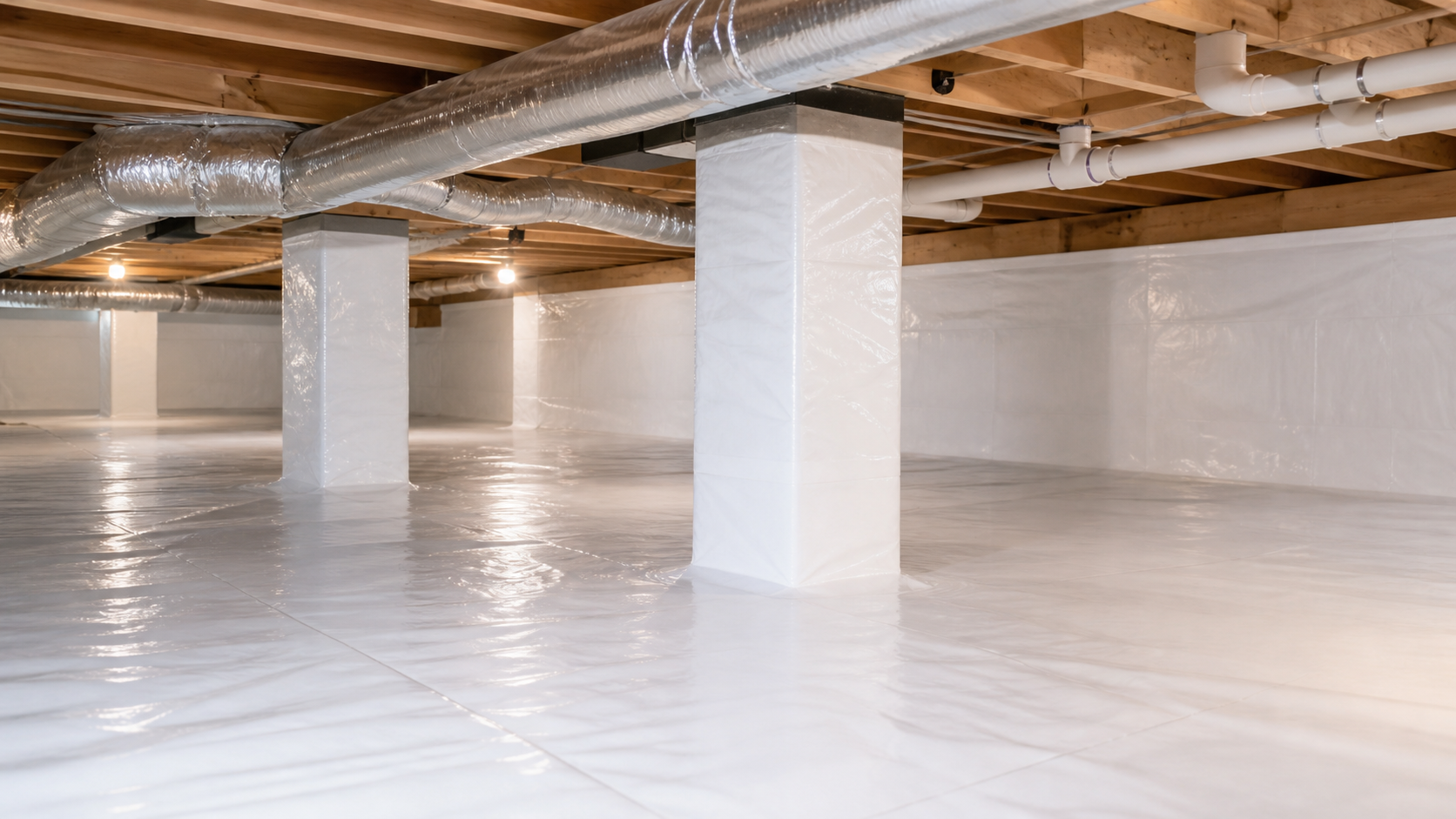
Short answer: Plan around $4,000–$12,000 for a 2026 Knoxville crawl-space encapsulation project. The figure is a market-planning range, not a fixed Volunteer quote; size, access, preparation, water conditions, selected components, and repair needs determine the written estimate.
2026 Knoxville crawl-space cost ranges
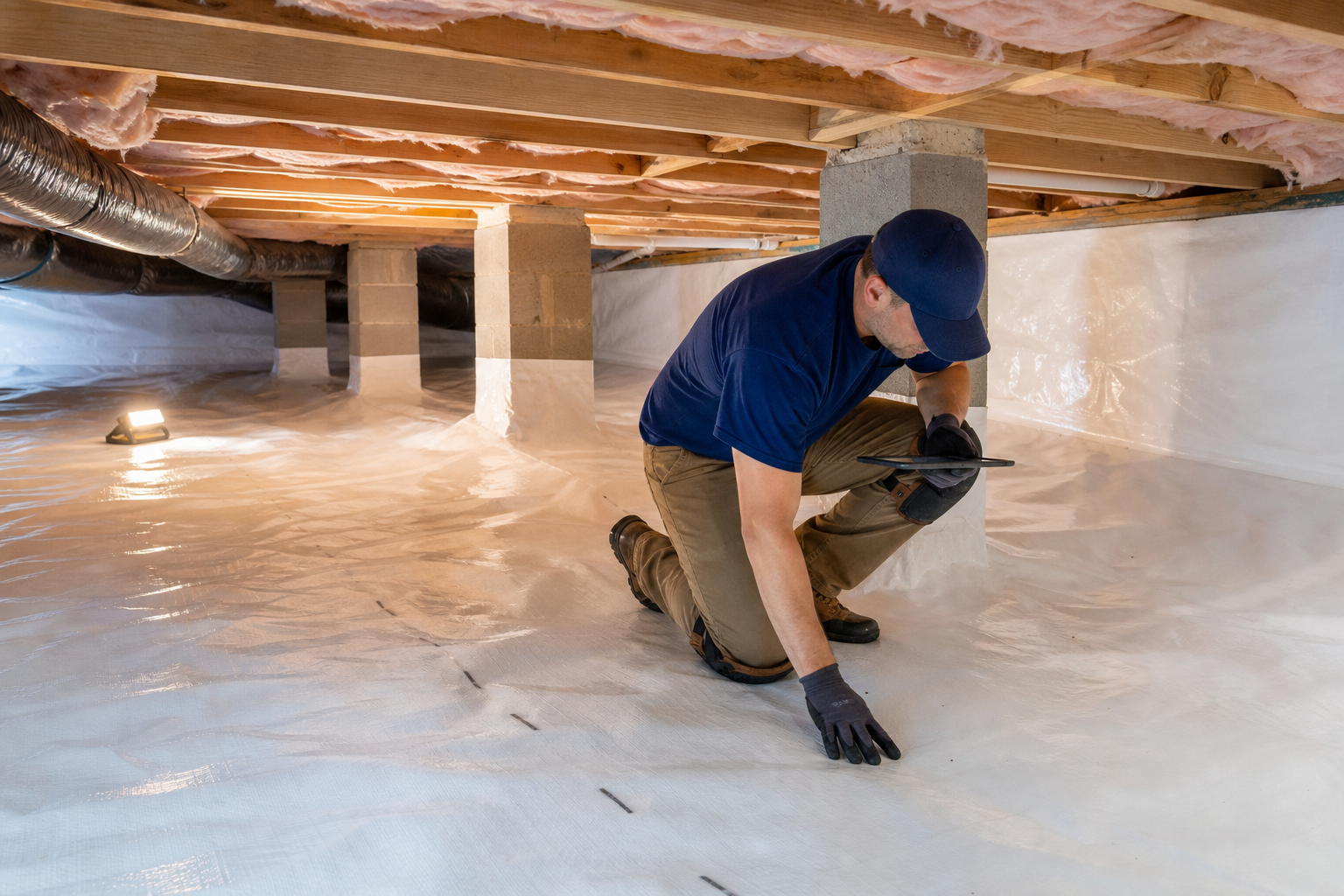
Start by comparing the work behind each total. A lower proposal may cover only the soil, while another may include wall and pier details, removal, drainage, a dehumidifier, insulation, or repair. The service name alone does not prove that the inclusions match.
| Service | 2026 planning range | Main variables |
|---|---|---|
| Full encapsulation | $4,000–$12,000 | Footprint, clearance, preparation, liner coverage, attachment details, water management, humidity control, insulation, and repair |
| Vapor barrier | $1,250–$3,000 | Floor area, liner selection, seams, piers, walls, penetrations, removal, and preparation |
| Drainage and waterproofing | $1,250–$3,500 | Water source, route, excavation, access, and system length; no sump-pump service is included |
| Crawl-space repair | $1,500–$8,000+ | Affected component, damage extent, access, moisture source, and specialist boundary |
| Dehumidifier and humidity control | $1,100–$3,300 | Capacity, condensate route, electrical work, placement, service access, sealing, and related preparation |
| Crawl-space insulation | $750–$3,500 | Area, system, removal, drying, obstructions, clearance, and installation location |
| Crawl-space inspection | $100–$400 | Visit type, size, access, documentation, and testing; estimate visits may differ |
Conditions that change an encapsulation estimate
The footprint establishes a material baseline, but condition and access often create the larger difference. Low clearance slows movement and detailing. Debris, old liner, wet insulation, or damaged materials can add removal and preparation. Numerous piers, pipes, ducts, wiring penetrations, vents, and divided sections add transitions that a floor-area figure does not capture.
Water source matters too. Ground vapor, humid air, roof or surface runoff, seepage, and plumbing leaks require different responses. A liner can limit vapor moving from soil, but it cannot redirect an active water route or repair a leaking pipe. The quote should show which correction comes before the liner.
Floor-only barrier versus full encapsulation
A vapor barrier can be the narrower choice when exposed soil is the main condition. Full encapsulation may extend the moisture-control plane to selected walls, piers, seams, edges, penetrations, vents, and the access door. Ask where the liner starts and stops, how it is attached, and how utilities will remain serviceable.
Drainage before concealment
Recurring liquid water should be traced before new material hides stains or flow patterns. Drainage and waterproofing may add excavation, collection channels, route planning, and discharge considerations. Volunteer does not list sump-pump installation, so no pump allowance belongs in these ranges.
Humidity equipment and electrical details
A dehumidifier can support a prepared crawl space when humid air remains part of the problem. The proposal should identify capacity, location, condensate handling, power, filter access, and service clearance. Equipment does not replace a ground barrier or active-water correction.
How Knoxville and East Tennessee conditions affect scope
Warm, humid weather and periods of heavy rain can expose different moisture paths around Knoxville-area homes. Properties also vary in grade, drainage, clearance, foundation-wall layout, additions, and access. These are inspection questions rather than assumptions: the written estimate should tie each recommended component to an accessible observation at the specific home.
Visible mold-like growth, pest activity, foundation movement, major structural damage, plumbing leaks, or basement conditions may affect the sequence without becoming Volunteer services. The scope should state when a separate qualified specialist is needed and whether that work must happen before moisture-control installation.
Materials and coverage to name in the quote
“Encapsulation” is not a material specification. Ask for the liner selection and the compatible tape, sealant, or attachment method. The quote should identify floor, wall, pier, seam, edge, penetration, vent, access-door, drainage, insulation, and equipment details that apply. Product thickness, warranties, or performance claims should be relied on only when they appear in the actual written proposal.
- Measured accessible footprint and areas not inspected
- Debris, old liner, insulation, or damaged-material removal
- Drying, cleaning, and surface preparation
- Floor, wall, pier, seam, edge, and penetration coverage
- Vent, access-door, pipe, duct, and wiring transitions
- Separate drainage, electrical, dehumidifier, insulation, and repair lines
- Exclusions, specialist referrals, completion checks, and maintenance access
Materials, labor, and additional crawl-space costs
Materials and labor should be understandable as separate parts of the estimate even when the contractor presents one total. Material quantity follows measured coverage, but liner selection, compatible tapes or sealants, wall and pier attachments, access-door details, drainage components, insulation, and humidity equipment can change the budget. Labor reflects clearance, access, preparation, removal, drying, excavation, the number of transitions, and the time required to keep utilities serviceable.
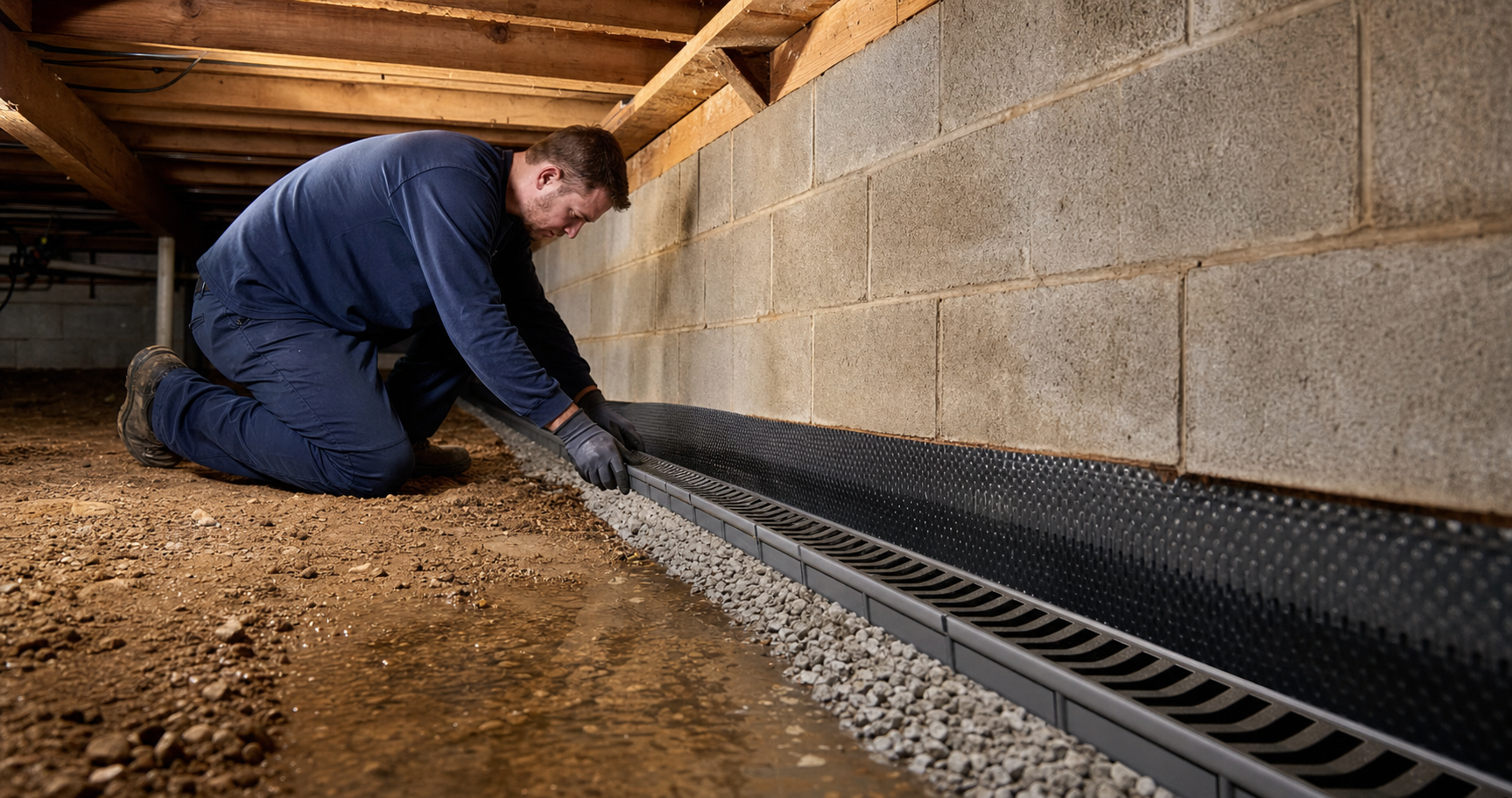
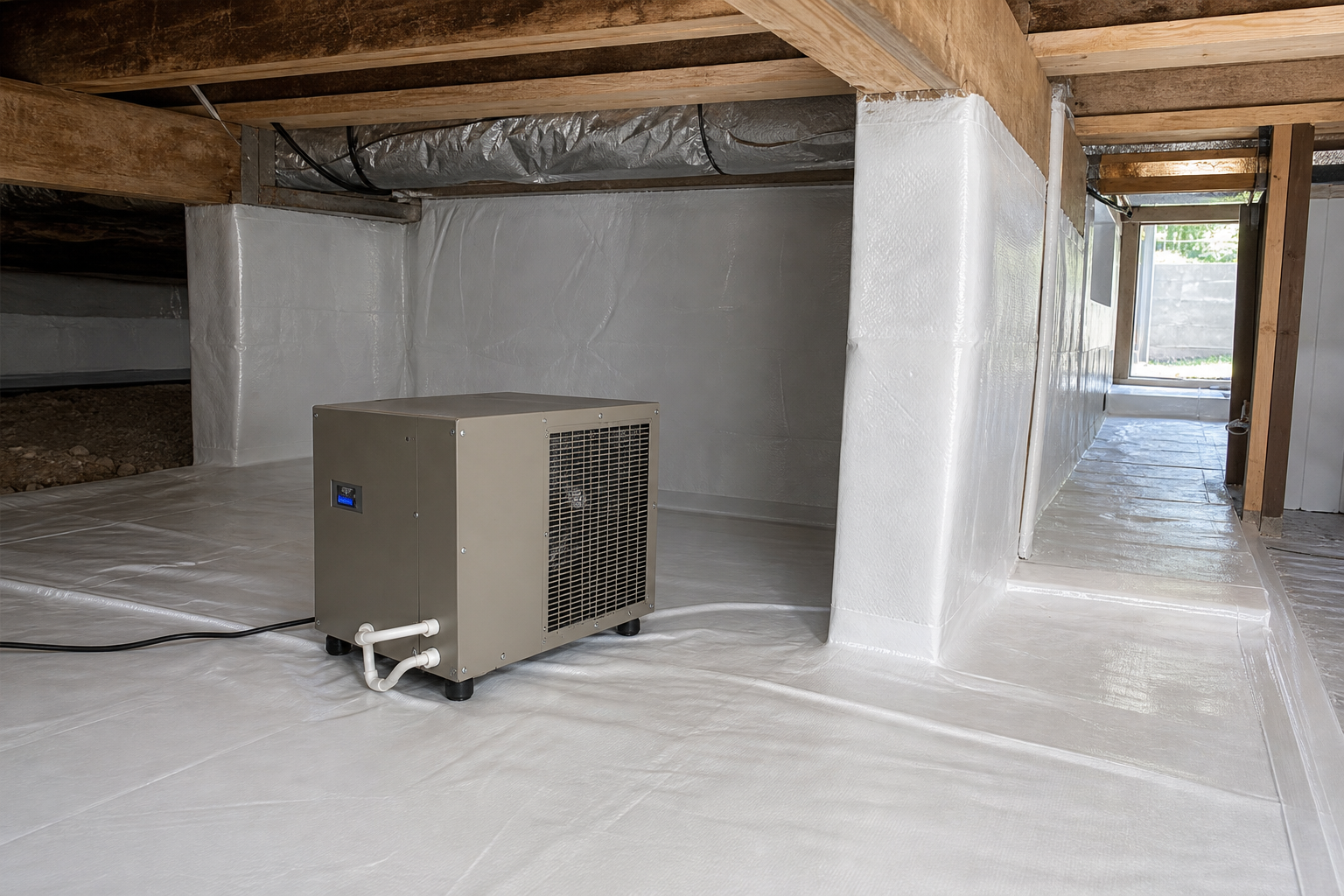
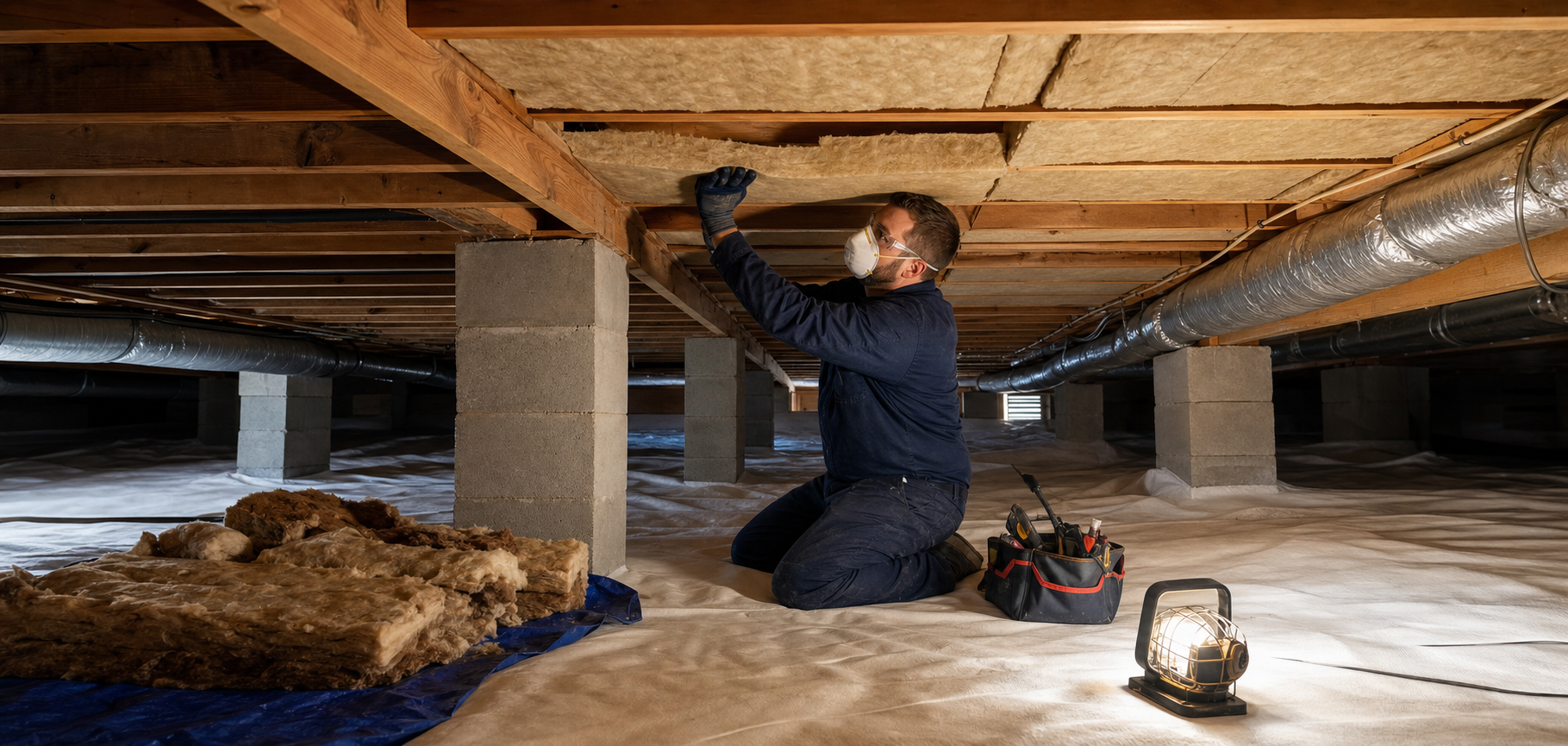
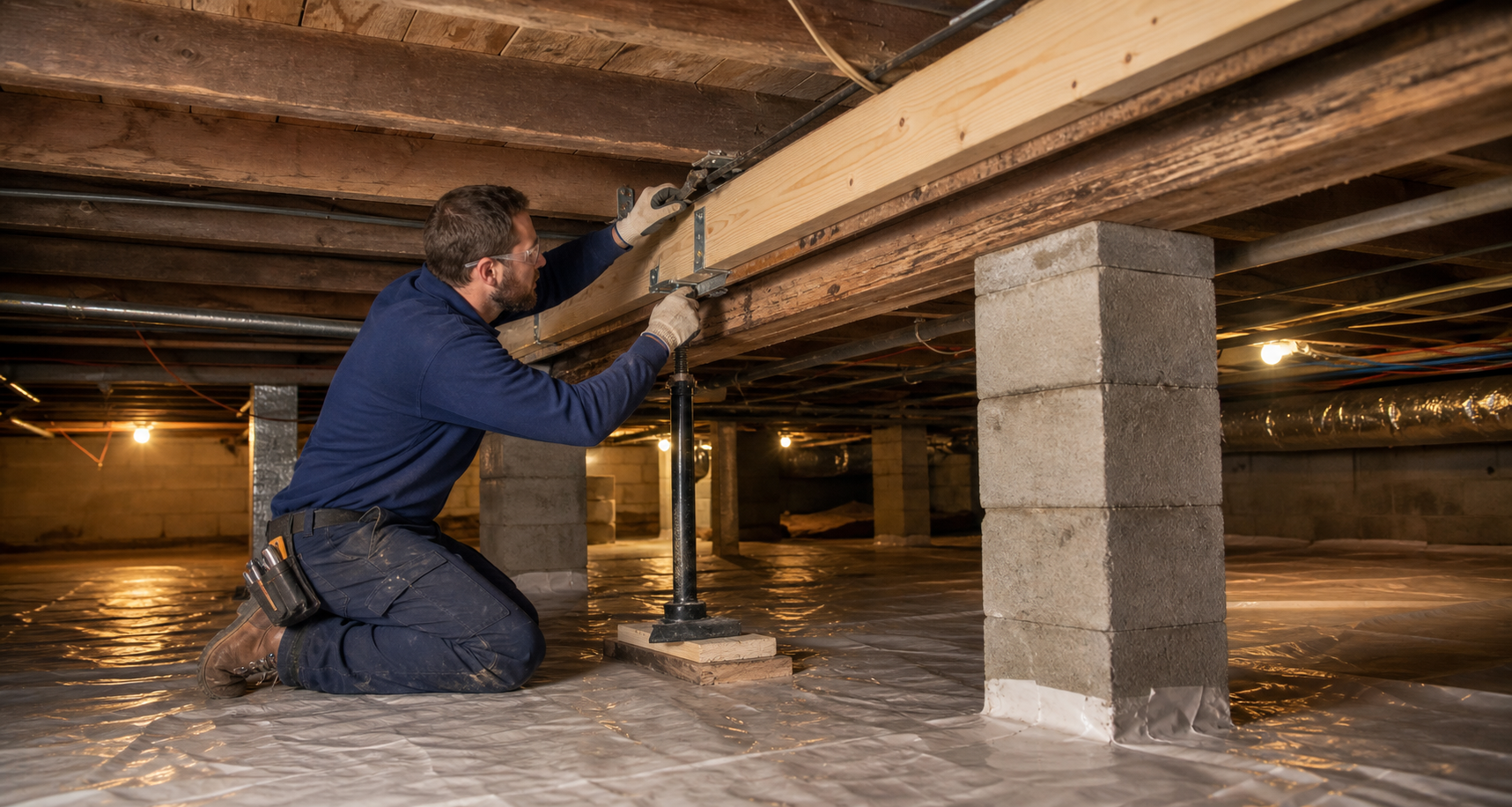
Potential additional costs include old vapor-barrier or insulation removal, debris handling, electrical work for a dehumidifier, drainage preparation, drying, and accessible crawl-space repair. A plumbing leak, suspected foundation movement, mold-like growth, or pest activity may require a different professional before the moisture-control work proceeds. Those specialist costs do not belong in a Volunteer estimate unless they are explicitly included by the appropriate provider.
Signs and crawl-space problems that can affect the budget
Warning signs are useful for preparing questions, but they do not establish a price without an assessment. Note bare soil, missing or torn liner, standing water, condensation, musty odors, wet or fallen insulation, wood staining, soft or changing floors, open vents or access gaps, pest entry, and symptoms that return after rain or during humid weather.
- Exposed soil: may support a vapor-barrier discussion.
- Recurring liquid water: may add drainage or another source correction before encapsulation.
- Wet insulation or damaged wood: may add removal, drying, accessible repair, or specialist review.
- Low clearance and divided crawl spaces: can increase labor and detailing time.
- Condensation or high humidity: may require evaluation of openings, ground vapor, active water, and dehumidification together.
Benefits, protection, and realistic value
The value of an encapsulation solution depends on matching it to the condition. A continuous liner and detailed transitions can provide moisture protection against selected soil-vapor and outside-air pathways. Drainage can address a recurring liquid-water route. A dehumidifier can manage air moisture after preparation. A more visible crawl space can make later inspection of liner, insulation, wood, utilities, and new water easier.
Moisture control may help reduce conditions associated with musty odors, mold growth, pests, wood deterioration, insulation damage, and indoor air-quality concerns. Whole-house air quality, comfort, energy efficiency, energy costs, and property value also depend on the rest of the building and HVAC system. Treat those as possible broader benefits rather than guaranteed savings, health outcomes, or resale gains.
Compare Knoxville contractors by scope, not price alone
A professional proposal should connect every recommended service to an accessible observation. Ask which problem the liner, drainage, dehumidifier, insulation, or repair line is intended to address. Confirm the materials, coverage, preparation, labor boundaries, exclusions, schedule assumptions, completion checks, and maintenance access in writing.
Volunteer Crawlspace Co. serves Knoxville and the approved nearby service locations published on this site, including Maryville, Oak Ridge, Sevierville, Farragut, Alcoa, Clinton, Corryton, Halls Crossroads, Karns, Lenoir City, Loudon, Powell, and Seymour. These communities are service areas, not separate offices. Call 865-459-7675 or use the site form to request a property-specific inspection.
What a typical professional encapsulation scope includes
A typical professional scope may include accessible inspection notes, measurements, removal and preparation, a specified liner, sealed seams and penetrations, selected wall or pier transitions, vent and access-door details, and a visible completion check. Drainage, electrical work, dehumidification, insulation, and crawl-space repair should appear as separate components when the property conditions support them.
Which moisture issues fall outside that scope?
Foundation-wall cracks, movement, suspected structural-integrity concerns, plumbing leaks, extensive wood damage, mildew or mold-like growth, pest activity, and basement conditions may require another qualified professional. Volunteer can record an accessible observation and explain how it affects sequence, but the company does not list foundation repair, mold remediation, pest control, plumbing, basement waterproofing, or sump-pump installation as services.
Why is a material-only price different from professional installation?
A liner purchase does not include assessment, removal, drying, surface preparation, attachments, transitions, drainage coordination, equipment setup, labor, safe access, or final inspection. Comparing a material receipt with a contractor estimate can hide most of the work. Homeowners should not enter a crawl space that appears wet, contaminated, electrically unsafe, or structurally unstable.
Compare estimates by sequence and responsibility
A clear proposal explains what happens first, who performs each part, and what conditions can change the schedule. It should distinguish inspection from diagnosis by another trade, accessible crawl-space repair from foundation work, drainage from basement waterproofing, and observation of mold-like growth or pests from remediation or treatment.
Ask how the completed area will remain visible for later checks. Homeowners should be able to look for new water, shifted or torn liner, changing humidity, reopened vents or access gaps, wet insulation, pest activity, and new staining. Maintenance access is part of a useful moisture-control plan.
Prepare for a Knoxville pricing inspection
Before the visit, note where and when odors, dampness, condensation, insects, floor changes, or standing water appear. Record whether symptoms follow rain or seasonal humidity. Share known plumbing leaks, prior drainage work, insulation changes, and previous crawl-space repairs. Do not enter an area that appears unsafe or unstable.
- Ask which observed condition supports every proposed line.
- Request separate totals when more than one service applies.
- Confirm whether the visit is an estimate, a paid inspection, or another inspection type.
- Keep the written scope, supplied photos, exclusions, and maintenance instructions together.
- Compare the same coverage and preparation before comparing totals.
What should a Knoxville homeowner budget for encapsulation?
A practical 2026 planning range is $4,000–$12,000. Larger, lower-clearance, divided, wet, or repair-heavy spaces can cost more; a narrower vapor-barrier scope may cost less.
Why can two crawl-space bids be far apart?
The bids may not contain the same preparation, liner coverage, wall and pier details, drainage, humidity control, insulation, repair, electrical work, exclusions, or follow-up access. Compare the written inclusions line by line.
Request a property-specific written scope
Use these figures as a budget framework, then let the accessible conditions and measured scope determine the estimate. Call Volunteer Crawlspace Co. at 865-459-7675 or use the request form to schedule an inspection for a Knoxville-area home.